Summary
A Miami-Dade Notice of Acceptance (NOA) is an official product approval issued by the Miami-Dade County Product Control Section. It documents the specific product model, approved construction, performance evidence, installation requirements, limitations, approval date, and expiration date.
For projects in Florida’s High-Velocity Hurricane Zone (HVHZ), the product must have documentation showing that it is approved for the intended HVHZ application. A Miami-Dade NOA is a widely recognized approval route, but project teams should always confirm the exact product, configuration, pressures, impact status, installation method, and current approval validity.

1. What Exactly Does a Miami-Dade NOA Certify?
Issued by the Miami-Dade County Product Control Section
A Notice of Acceptance is reviewed and issued by the Product Control Section within Miami-Dade County’s Department of Regulatory and Economic Resources.
Manufacturers submit supporting documentation such as test reports, engineering drawings, product specifications, installation instructions, and quality-assurance information. When accepted, the product receives an official NOA document with a unique file number, approval date, and expiration date.
The document identifies the product covered by the approval and may specify its materials, dimensions, glazing, reinforcement, hardware, design pressures, anchors, substrates, installation conditions, and other limitations.
Application in the High-Velocity Hurricane Zone
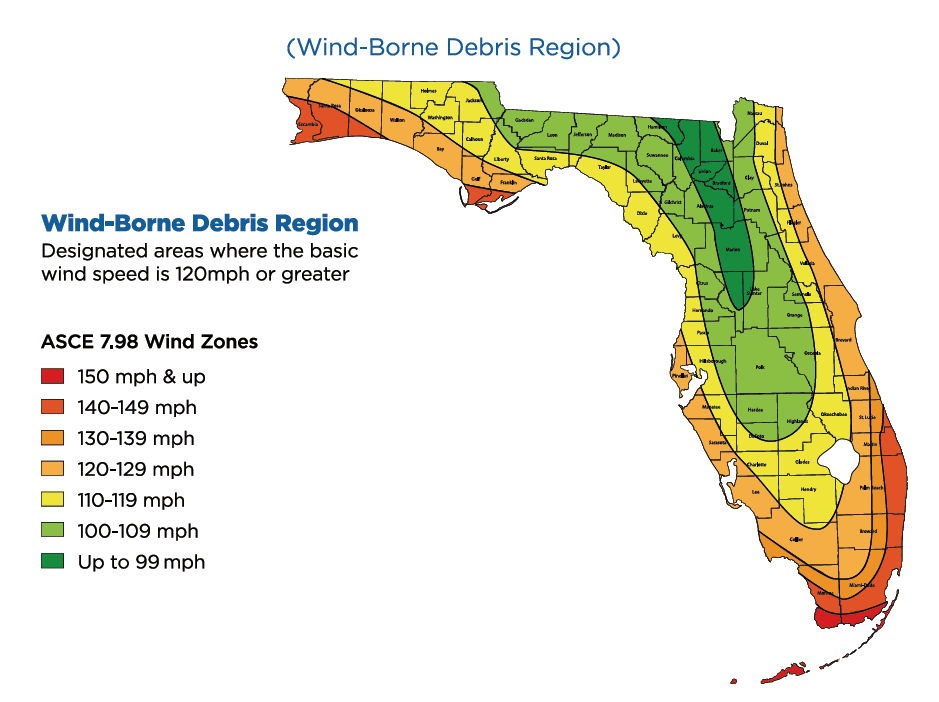
Florida’s High-Velocity Hurricane Zone includes Miami-Dade and Broward counties. Products used in this zone must comply with the applicable HVHZ provisions of the Florida Building Code.
Exterior building-envelope components—including windows, exterior doors, shutters, roof assemblies, and other applicable products—must have approval documentation that is valid for their intended HVHZ use.
An NOA is not a general statement that every version of a product is hurricane rated.
It applies only to the product models, sizes, materials, components, pressures, and installation conditions identified in the approval document.
2. What Tests Are Used for NOA Evaluation?
The required testing depends on the product category, configuration, and intended application. For impact-resistant windows and doors evaluated for HVHZ use, the supporting evidence commonly references TAS 201, TAS 202, and TAS 203.
| Test Standard | Test Category | What It Evaluates |
|---|---|---|
| TAS 201 | Impact testing | Evaluates resistance to large- or small-missile impact, depending on the product location and applicable test requirements. |
| TAS 202 | Structural and weather testing | May include air infiltration, water resistance, uniform static air-pressure loading, and other performance evaluations applicable to the product. |
| TAS 203 | Cyclic wind-pressure testing | Evaluates the impacted assembly under repeated positive and negative pressure cycles intended to represent severe wind conditions. |
The standards and tests listed in a product’s actual NOA or supporting test reports control. Not every product category or configuration follows an identical test sequence.
Large- and Small-Missile Impact Testing
Impact testing evaluates whether the assembly can resist specified wind-borne debris. The applicable missile category depends on factors such as the product type, installation height, location, and code requirements.
Cyclic Wind-Pressure Testing
After impact testing, applicable assemblies may be subjected to repeated positive and negative pressure cycles. This evaluates whether the complete system—including the frame, glass, hardware, seals, reinforcement, and anchors—can maintain the required integrity.
Static Pressure, Air, and Water Testing
Depending on the approval and product category, testing may also evaluate structural performance under uniform static air pressure, air infiltration, and resistance to water penetration.
Documentation requirement: Before publishing specific test values or NOA numbers for YY WINDOWS, confirm them against the currently valid approval document for the exact product model. Do not apply one product’s test values to an entire product range.
3. NOA vs. Florida Product Approval vs. NFRC: What’s the Difference?
These approval and rating systems address different performance questions. They should not be treated as interchangeable during product selection, procurement, permitting, or plan review.
| Approval or Rating | Primary Purpose | Where It Applies | What to Verify |
|---|---|---|---|
| Miami-Dade NOA | Documents acceptance of a specific product or system, including applicable structural, impact, weather, and installation requirements. | Miami-Dade County and other jurisdictions where accepted by the applicable Authority Having Jurisdiction. | File number, approval and expiration dates, model, impact status, pressures, sizes, components, limitations, and installation. |
| Florida Product Approval (FL#) | Provides statewide product approval within the limits stated in the official Florida approval record. | Florida, subject to the approval’s limits of use. The record states whether the product is approved inside or outside the HVHZ. | HVHZ status, impact status, design pressures, approved configurations, code version, and installation documents. |
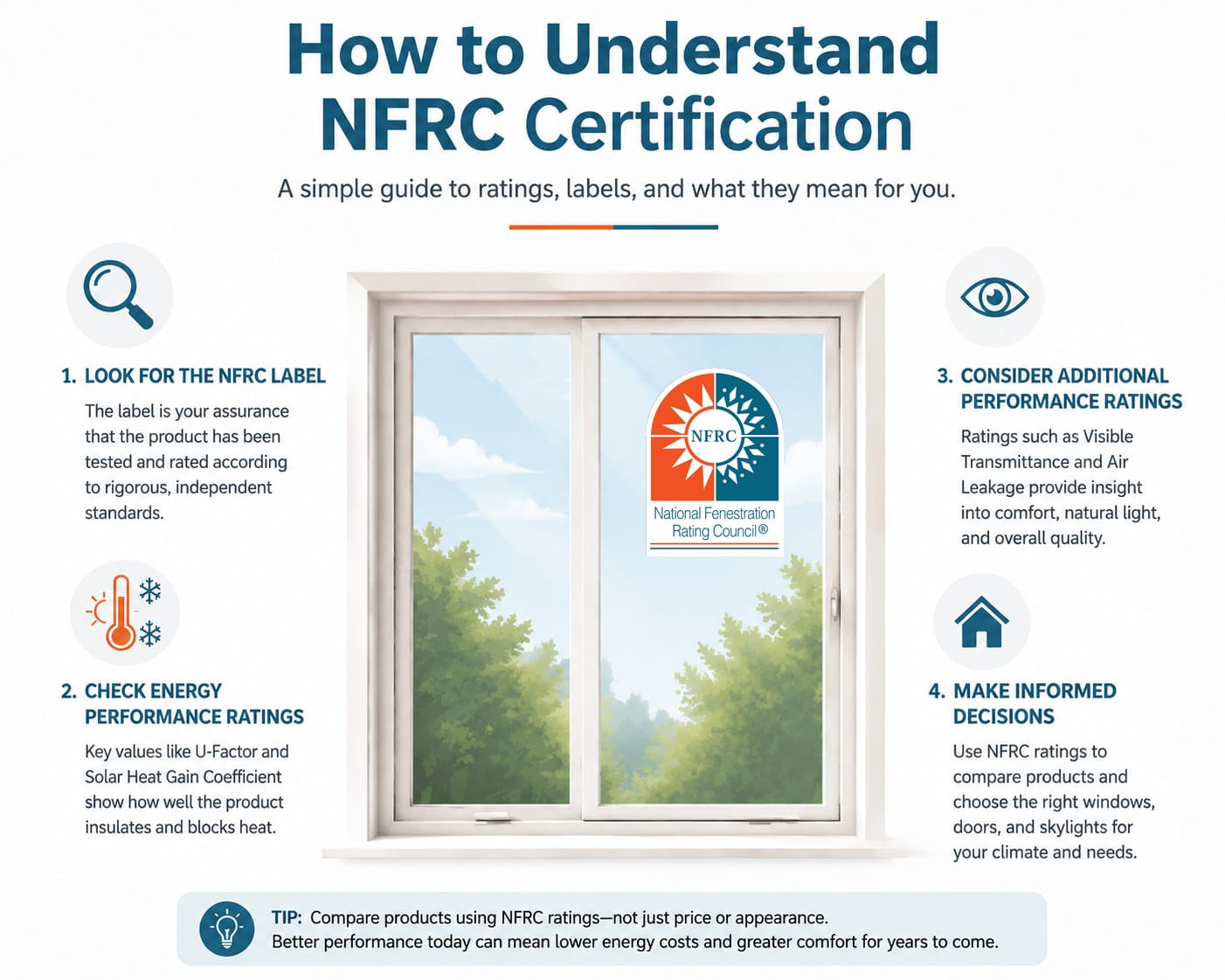
| NFRC Rating | Rates energy-performance characteristics such as U-Factor, SHGC, Visible Transmittance, and Air Leakage. | Used for energy-code, program, specification, and product-comparison purposes where required. | Exact product configuration, U-Factor, SHGC, VT, Air Leakage, and applicable label or certificate. |
Terminology note: “CSA Florida Approval” should not be presented as though it were a separate Florida government approval category. If CSA Group supplied testing, certification, or evaluation documentation for a product, identify that role accurately and list the corresponding Florida Product Approval separately.
A product approved only for use outside the HVHZ should not be described as suitable for every Florida coastal project. Likewise, an NFRC rating does not replace structural, impact, or product-approval documentation.
Energy performance and hurricane-related structural performance answer different questions and must be verified independently.
4. What NOA Means for Architects: Using It During Plan Review
When specifying windows and doors for HVHZ projects, architects should reference the applicable approval number and confirm that the documented configuration matches the project’s requirements.
Product Model and Configuration
Confirm that the specified product model, frame configuration, glass type, hardware, reinforcement, mullions, and other components appear in the approval documentation.
Opening Size and Design Pressure
Verify that the proposed opening dimensions are within the approved size limits and that the approved positive and negative design pressures meet the project requirements.
Installation Conditions
Match the approved anchors, spacing, embedment, edge distances, substrates, perimeter clearances, and other installation conditions to the project details.
Approval Validity
Confirm that the approval document is current and acceptable under the applicable code edition and permitting requirements.
YY WINDOWS can provide available technical drawings, product data, test documentation, and approval records for the selected system. Final suitability should be reviewed by the project architect, engineer, and Authority Having Jurisdiction.
5. What NOA Means for Homeowners: How to Verify a Product
For homeowners, an NOA provides verifiable information about an approved product. It is more reliable than a general statement such as “hurricane-rated” because the official document identifies the precise product and approved installation conditions.
- Ask for the complete NOA number. Obtain it from the manufacturer, supplier, contractor, quotation, or project submittal documentation.
- Search the official Miami-Dade database. Confirm that the number corresponds to the stated manufacturer and product model.
- Check the expiration date. Make sure the approval is current and has not expired.
- Review the approved configuration. Compare the frame, glass, dimensions, hardware, and impact designation with the product being supplied.
- Review the approved installation method. Confirm that the actual anchors, substrate, spacing, and installation conditions match the approval drawings.
- Confirm permit acceptance. Ask the contractor or local building department to confirm that the documentation is suitable for the specific project.
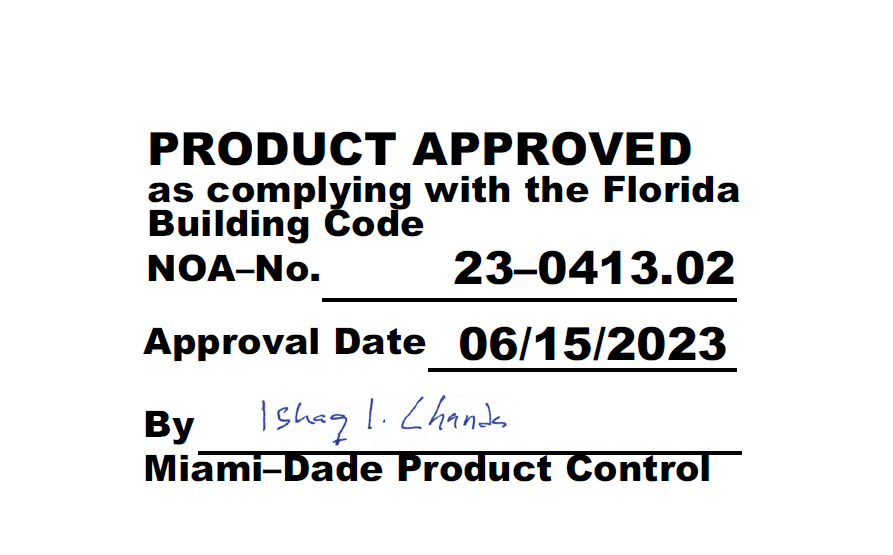
Important: A matching approval number is only the first step. The supplied product and its installation must also match the approved configuration and project requirements.
6. What NOA Means for Distributors
A valid NOA can give distributors access to projects that require Miami-Dade-approved products. However, approval claims must be tied to the specific product models and configurations covered by the official documentation.
Use Product-Specific Certification Claims
Avoid stating that every product offered by a company is NOA certified unless each product is covered by a current approval. A more accurate description is:
Selected YY WINDOWS systems are supported by applicable energy-performance ratings, product approvals, and third-party test documentation. Certification status and approved configurations are available for verification by product model.
Documents Distributors Should Request
- Current NOA or Florida Product Approval documentation
- Product-specific test reports and certification records
- Approved engineering and installation drawings
- Positive and negative design-pressure values
- Approved dimensions, glazing, hardware, and reinforcement details
- Impact and HVHZ status
- Approval and expiration dates
This documentation allows distributors to support product claims with traceable evidence instead of relying on broad marketing descriptions.
Frequently Asked Questions
Does a Miami-Dade NOA have an expiration date?
Yes. An NOA includes an approval date and an expiration date. Verify the current document in the official database rather than relying on an old downloaded copy.
Can an NOA be used interchangeably with Florida Product Approval?
Not automatically. They are different approval mechanisms. The applicable documentation must show that the precise product and configuration are approved for the project location and intended use.
Can a product without a Miami-Dade NOA be installed in the HVHZ?
A product must have approval documentation that is valid for its intended HVHZ application. A Miami-Dade NOA is a common route, but a product may also have a recognized statewide approval whose official record explicitly identifies it as approved for HVHZ use.
Final acceptance remains subject to the applicable code, approval documents, permit review, and Authority Having Jurisdiction.
Does impact-resistant automatically mean HVHZ-approved?
No. Impact resistance and HVHZ approval are related but separate fields. A product may be classified as impact resistant while its Florida Product Approval record states that it is not approved for use in the HVHZ.
Does an NOA apply to every size of the same product?
No. The approval document defines the applicable product models, configurations, maximum sizes, design pressures, components, and installation conditions.
Is NFRC certification a substitute for an NOA?
No. NFRC ratings address energy performance, while an NOA addresses product acceptance and the performance conditions identified in the approval. One does not replace the other.
Official Verification Resources
- Miami-Dade Product Control Search — Search for Notices of Acceptance by file number, manufacturer, product, or classification.
- Florida Product Approval Search — Check FL numbers, HVHZ status, impact status, design pressures, and supporting documents.
Further Reading
- About YY WINDOWS — Learn about our manufacturing background, quality controls, and certification approach.
- Window and Door Systems — Explore our energy-efficient and hurricane-resistant aluminum window and door systems.
- Project Case Studies — View North American project applications and completed installations.